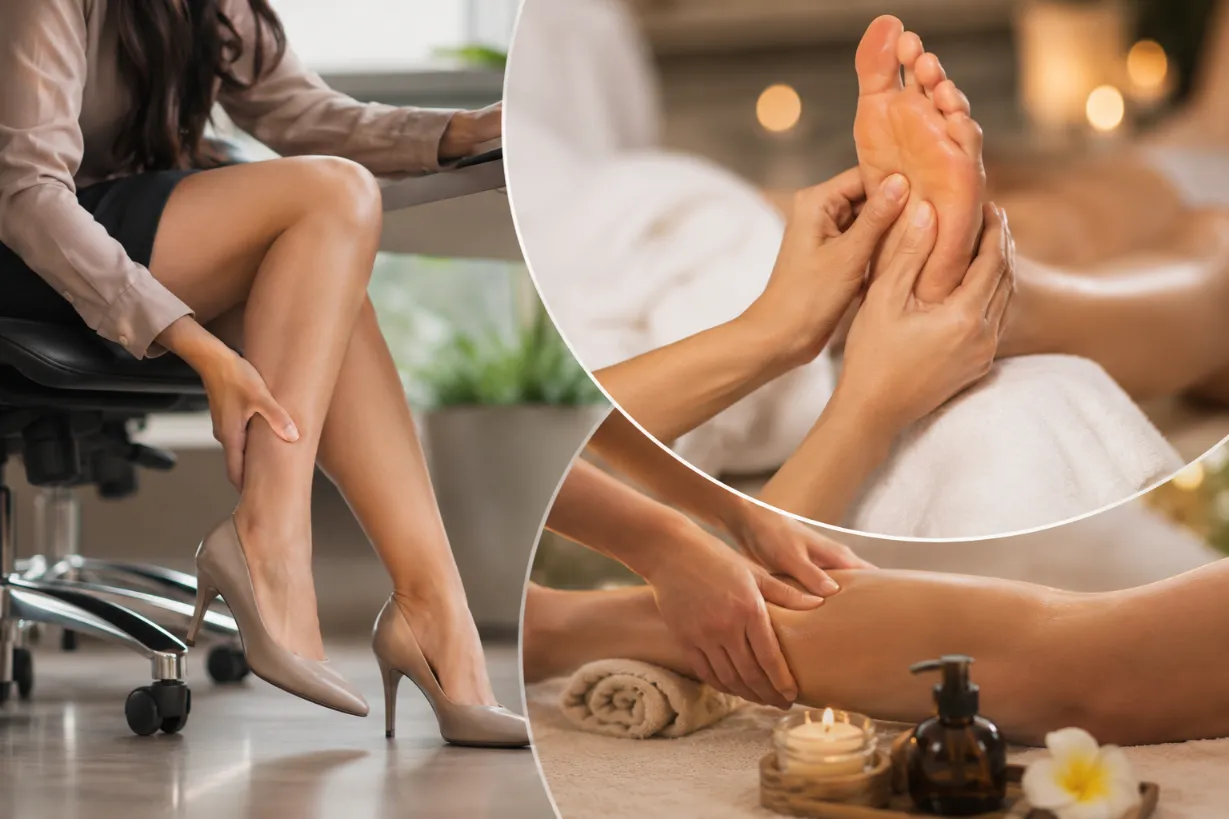
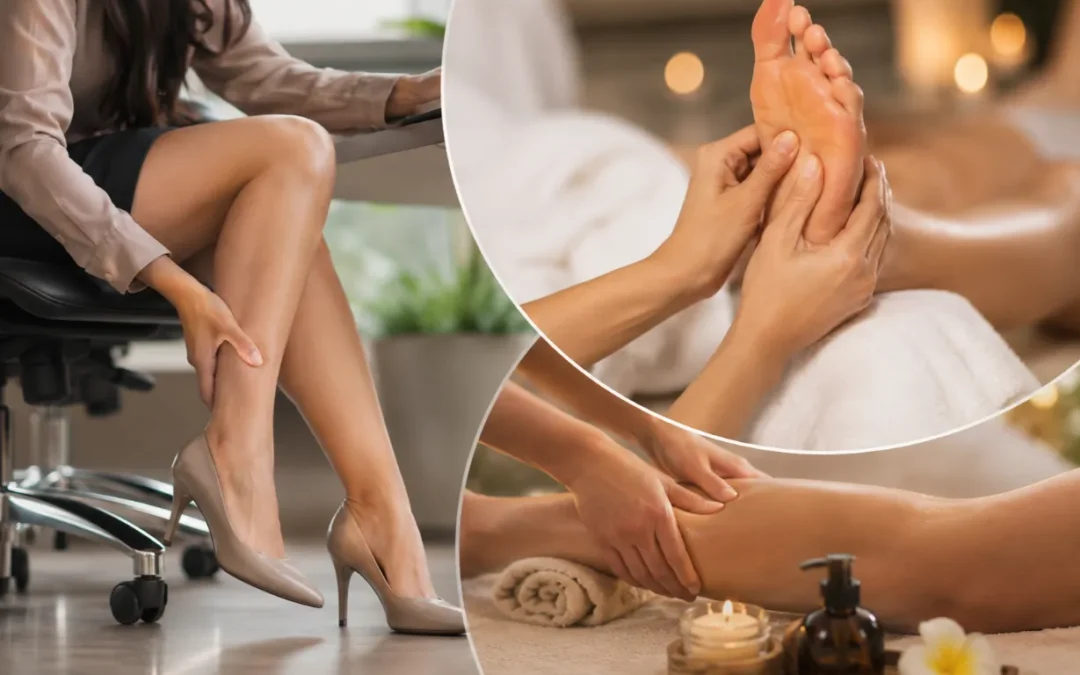
By the end of a long Singapore day, a lot of us feel it first in our legs — that heavy, dull, tired ache from the knees down. At our outlets in PLQ Mall (Paya Lebar) and NEX (Serangoon), some of our most regular guests are retail and F&B staff, nurses, teachers and security officers who are on their feet for eight, ten, sometimes twelve hours a day. Just as many are office workers and commuters who sit almost as long. Different days, same complaint: tired, achy, heavy legs and feet.
If that sounds like you, here is an honest look at why it happens, what a foot reflexology or leg massage can — and can’t — do for it, and the warning signs that mean you should see a doctor before booking any massage at all.
Why your legs feel heavy and tired
Whether you stand or sit too long, the underlying issue is similar: your leg muscles aren’t getting their usual variety of movement, and fluid tends to settle in the lower limbs.
- Standing all day keeps the calf and foot muscles under constant low-level load. They fatigue, tighten and start to ache, and gravity encourages fluid to pool around the ankles and feet.
- Sitting all day is the flip side. The calf muscles barely contract, so the natural “muscle pump” that helps move blood back up the legs is hardly used. Feet and ankles can feel puffy, stiff and tired by evening.
- Footwear and hard floors — unsupportive shoes, heels, and Singapore’s hard retail and hospital floors — add to foot and arch fatigue.
For most healthy people this is ordinary, temporary muscle fatigue and mild fluid retention. It usually eases overnight. The discomfort is real, though, and that’s where hands-on treatment can genuinely help you feel better.
What foot reflexology and leg massage actually do
Let’s be straight about the evidence, because there’s a lot of marketing hype in this space. The most reliable, well-supported benefit of a foot or leg massage is relaxation and relief of muscle tension. Firm, rhythmic pressure on tired feet and calves helps the muscles let go, eases that “heavy legs” sensation, and shifts your nervous system out of go-go-go mode. The Cleveland Clinic notes that a foot massage encourages the body’s parasympathetic “rest and digest” response, which is why it can lift your mood, lower stress and help you sleep.
You’ll also hear that massage “boosts circulation.” Here the science is genuinely mixed. Some studies show a short-term, local increase in blood flow during and just after a massage; others find the effect is modest and doesn’t last. The honest summary: a leg massage may give your circulation a brief, gentle nudge and is wonderful for tired, tight muscles — but if you want to meaningfully improve circulation over the long term, regular movement (even a brisk daily walk) does far more than any massage can.
The honest version. Foot reflexology and leg massage are excellent for relaxation, comfort and easing tired, tight muscles. They are not a medical treatment and not a cure for varicose veins, venous insufficiency or any circulatory disease. Think of them as a feel-good, tension-relieving complement to a healthy, active lifestyle — not a replacement for moving your body or for proper medical care when something is wrong.
Which FootNote treatments suit tired legs and feet
Over the years we’ve learnt that the “right” treatment depends on where you carry the fatigue:
- Signature Foot Reflexology — ideal if the ache lives mostly in your soles, arches and toes. You recline in one of our cushioned reflex chairs while a therapist works the feet and lower legs with firm, structured pressure. A favourite after a day of walking or standing.
- Body / leg-focused massage — if your calves and thighs are tight and heavy, an oil or acupressure body massage on a proper massage bed lets the therapist address the larger leg muscles directly.
- Combo (Foot & Shoulder) — for the very common combination of tired feet and a stiff upper back from carrying tension all day.
Throughout the session our therapists check in on pressure — many of our reviewers mention this. There’s no benefit in gritting your teeth through pain (more on that below), so do tell us if you’d like it firmer or gentler, or to focus on a particular sore spot.
⚠ IMPORTANT — when aching or swollen legs need a doctor, not a massage. Most tired legs are harmless. But some leg symptoms are a sign of something that massage can make worse, not better. Please see a doctor — and do not book a leg massage — if you have:
- One leg or calf that is swollen, painful, warm and/or red, especially if it came on suddenly. This can be a sign of a deep vein thrombosis (a blood clot). There are documented cases of massage dislodging a clot, which is dangerous.
- Sudden swelling with chest pain or breathlessness — this is a medical emergency. Call 995.
- Persistent or worsening swelling, or leg swelling if you have diabetes, heart, kidney or liver conditions — get it assessed first.
- Numbness, persistent tingling, cramping or pain in the legs and feet that won’t go away. Poor circulation needs proper medical attention; see a doctor or podiatrist.
- Open wounds, skin infections, a recent injury, or any condition that gets worse when the area is touched.
When in doubt, get checked first. A clean bill of health means you can relax and enjoy your massage properly.
Simple things that help between sessions
A massage feels great, but the biggest wins for tired legs are the small daily habits in between:
- Move regularly. If you stand all day, shift your weight and walk a few steps when you can. If you sit all day, stand up and walk for a couple of minutes every hour.
- Calf raises. A slow set of heel-raises activates the calf “muscle pump” that helps move blood and fluid back up your legs.
- Putting your feet up for ten to fifteen minutes in the evening helps gravity work in your favour.
- Supportive footwear. Cushioned, well-fitting shoes make a real difference on hard floors.
- Stay hydrated. Easy to forget in our climate.
If your job allows it and a doctor agrees it’s suitable for you, graduated compression socks can also help with end-of-day heaviness.
What to expect at your session
A session is genuinely relaxing — warm, quiet, and unhurried. Afterwards your feet and legs may feel light and a little tender, which is normal. Drink some water, and avoid a hard gym session immediately after if you’ve had firmer work. For more on getting the most out of a session, see our guide on what to take note of after a massage, and our overview of the benefits of foot reflexology.
Give your legs a proper rest
Drop by FootNote Reflexology at PLQ Mall (Paya Lebar) or NEX (Serangoon) — two convenient, MRT-linked spots to unwind after a long day. Over 1,000 Google reviews and a 4.9-star average. Book your appointment.
Frequently asked questions
Is a foot reflexology or leg massage good for tired legs from standing all day?
Yes — for relaxation and easing tired, tight muscles, it’s one of the most soothing things you can do. It helps the “heavy legs” feeling and the muscle fatigue. It won’t fix an underlying medical cause of swelling, so see a doctor if swelling is one-sided, sudden, painful or persistent.
Does leg massage really improve circulation?
The evidence is mixed. A massage may briefly increase local blood flow and feels wonderful on tired muscles, but the effect is usually short-lived. Regular movement and exercise do far more for long-term circulation than massage does.
How often should I come for tired legs?
There’s no fixed rule — it depends on your body and your work. Many guests with physically demanding jobs come weekly or fortnightly for maintenance, while others come when they feel they need it. Our therapists are happy to suggest a rhythm that suits you.
I have varicose veins — can I still get a leg massage?
Massage is not a treatment for varicose veins and shouldn’t be done directly over significantly affected veins. Please check with your doctor first; if they’re happy for you to have a gentle massage, let our therapist know so they can adapt.
Where are your outlets?
We have two: PLQ Mall, 10 Paya Lebar Road, #04-15 (Paya Lebar MRT), and NEX, 23 Serangoon Central, #03-31 (Serangoon MRT).
About this guide. This article was written and reviewed by the therapy team at FootNote Reflexology, an award-winning foot reflexology and massage establishment with outlets at PLQ Mall and NEX, featured by Honeycombers, Daily Vanity and The Best Singapore, with over 1,000 Google reviews at a 4.9-star average. It is general wellness information only and is not medical advice, diagnosis or treatment. Always consult a qualified healthcare professional about any symptom or health condition. Please don’t book a session if you are pregnant, nursing an injury, or have had surgery within the past three months.
Sources
- Cleveland Clinic — Reflexology: what it is and how it works (relaxation / parasympathetic response). https://health.clevelandclinic.org/reflexology
- Cancer Research UK — Reflexology (safety; no evidence it cures disease). https://www.cancerresearchuk.org/about-cancer/treatment/complementary-alternative-therapies/individual-therapies/reflexology
- Pain Science — Massage and circulation (why claims are overstated; clot case reports). https://www.painscience.com/articles/massage-and-circulation.php
- Live Science — Does massage help circulation? (mixed, mostly short-term evidence). https://www.livescience.com/does-massage-help-circulation