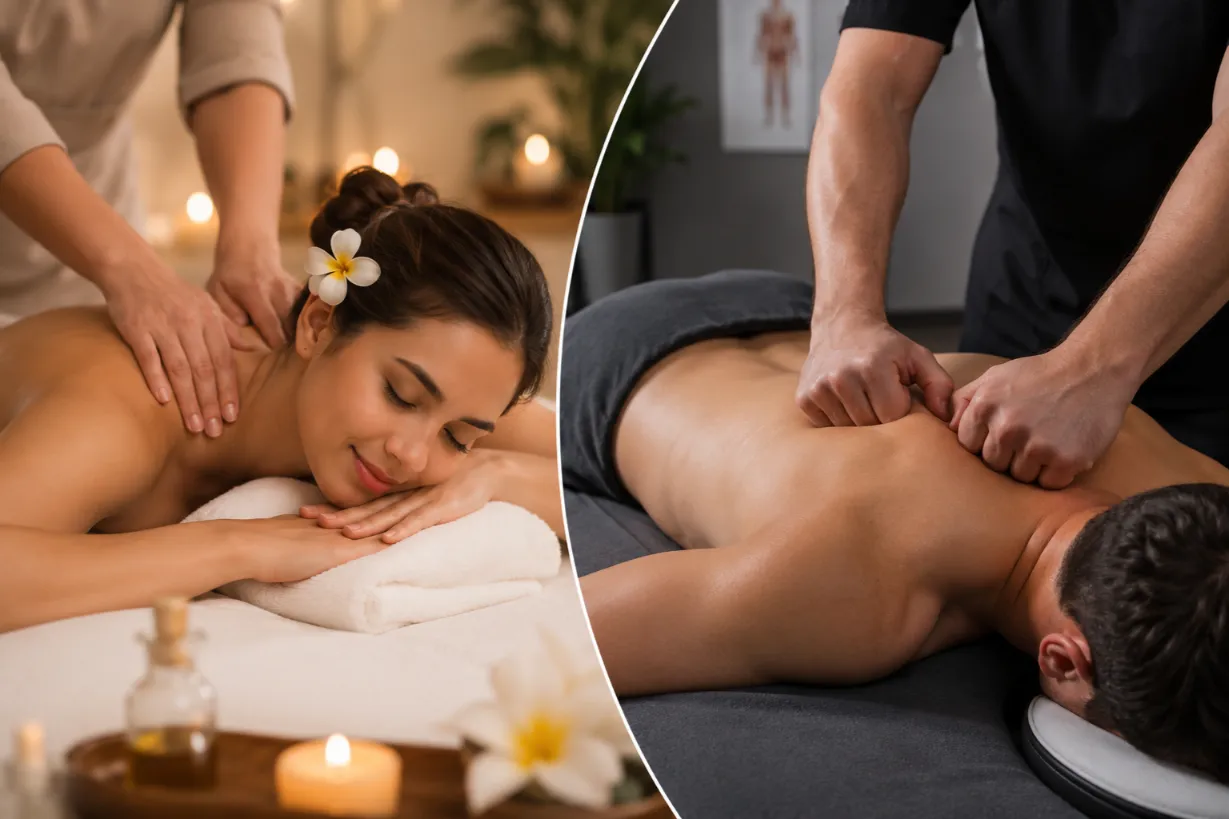
It’s one of the most common questions we get at the front desk of our PLQ Mall and NEX outlets: “Should I do the firm one or the gentle one?” Deep tissue and relaxation massage both feel wonderful, but they’re built for different goals — and booking the wrong one for what your body needs can leave you either underwhelmed or unexpectedly sore. Here’s a clear, honest guide to telling them apart and choosing well.
What a relaxation body massage is
A relaxation massage (often done with oil, in the Swedish style) uses long, flowing, rhythmic strokes and lighter-to-medium pressure. The goal is exactly what it sounds like: to calm your nervous system, ease general muscle tension, and leave you feeling unwound and refreshed. It’s the classic “switch off and melt into the bed” experience.
It suits you if: you’re stressed, mentally drained, sleeping poorly, new to massage, or you simply want to relax rather than target a specific problem area. It’s also the gentler, more comfortable choice if firm pressure isn’t your thing.
What a deep tissue (firm acupressure) massage is
Deep tissue work uses slower, firmer, more focused pressure to reach the deeper layers of muscle and the connective tissue around them. Instead of gliding over the surface, the therapist works into specific tight bands, knots and trigger points. It’s targeted rather than dreamy.
It suits you if: you have stubborn tightness or knots (think desk-bound shoulders, a tight lower back, or hard-worked legs), you carry chronic tension in specific spots, or you generally prefer firm, “really get in there” pressure. It can feel intense in places — productive, but not the floaty experience of a relaxation massage.
Side by side
|
|
Relaxation massage |
Deep tissue massage |
|
Main goal |
De-stress, unwind, ease general tension |
Target specific knots, chronic tightness |
|
Pressure |
Light to medium |
Firm and focused |
|
Feel |
Soothing, flowing, sleepy |
Intense in spots, “productive” |
|
Best for |
Stress, poor sleep, first-timers, full-body calm |
Tight shoulders/back/legs, persistent knots |
|
Afterwards |
Usually just relaxed |
Possible mild soreness for a day or two |
At FootNote, our Rejuvenating Body Massage and oil work lean towards the relaxing end, while our acupressure work (including the back & shoulder and combo options) lets a therapist apply the firmer, targeted pressure of deep tissue where you need it. In practice, many sessions blend the two — relaxing overall, firmer on the trouble spots.
Is more pressure always better? (No.)
There’s a stubborn myth that a massage only “works” if it hurts. It doesn’t. Pain is not a measure of effectiveness, and gritting your teeth through pressure that’s too strong can leave you bruised and sore for no extra benefit. Good deep tissue should feel firm and intense but controlled — never sharp, electric or alarming. The most useful thing you can do is communicate: tell your therapist if you’d like more or less, and speak up immediately if anything feels sharp or causes numbness or tingling.
Our approach to pressure. Something our reviewers mention often: our therapists check in on pressure throughout the session and adjust to you. There’s no “tougher is better” badge of honour here — the right pressure is whatever leaves your body feeling better, not battered.
Why you might feel sore after a deeper massage
If you’ve had firm, deep work, it’s normal to feel mildly sore or stiff for the next 24 to 48 hours — much like the day after an unfamiliar workout (what trainers call DOMS, delayed-onset muscle soreness). This is simply your muscles responding to the pressure, and it settles on its own. To stay comfortable:
- Drink some water and rest a little after your session.
- Avoid an intense gym session immediately afterwards — give worked muscles time to recover.
- A warm shower or gentle heat can ease post-massage stiffness.
(One myth worth retiring: massage doesn’t “flush out toxins.” The post-massage soreness is a normal muscle response, not your body detoxing.) If soreness is severe, or it lasts beyond a few days, check in with a doctor. Our guide on what to take note of after a massage has more aftercare tips.
⚠ Who should avoid or modify deep tissue (please read). Deep tissue is very safe in trained hands, but firm pressure isn’t right for everyone. Please tell us beforehand — and check with your doctor first — if any of these apply:
- A blood-clotting disorder or a history of deep vein thrombosis (DVT). Firm pressure on the legs can be unsafe; clearance is essential.
- A recent injury, fracture, surgery, or any inflamed, bruised or infected area. We won’t work directly over these.
- Osteoporosis or fragile bones, or certain medical conditions where deep pressure should be avoided or adapted.
- You’re feeling unwell, feverish, or have a skin condition over the area.
In line with our standard policy, please don’t book a session if you are pregnant, nursing an injury, or have had surgery within the past three months. When firm work isn’t suitable, a gentler relaxation massage is often a lovely alternative.
So, which should you book?
A quick rule of thumb:
- Choose relaxation if your main need is to de-stress, sleep better, or simply enjoy an hour of calm.
- Choose deeper, targeted work if you have specific knots or persistent tightness you want addressed.
- Not sure? Tell us at booking or when you arrive. Our therapists can recommend the right option, and tailor the pressure as we go.
Book the massage that fits you
Whether you want to unwind or work out the knots, FootNote Reflexology has you covered at PLQ Mall (Paya Lebar) and NEX (Serangoon). Over 1,000 Google reviews at a 4.9-star average — with no hard selling, just honest pressure. Book your appointment.
Frequently asked questions
What’s the difference between deep tissue and relaxation massage?
A relaxation massage uses lighter, flowing strokes to de-stress and ease general tension. Deep tissue uses slower, firmer pressure to target specific knots and chronic tightness. One is about calm; the other is about targeted relief.
Does a deep tissue massage have to be painful to work?
No. Pain is not a measure of effectiveness. Good deep tissue feels firm and intense but controlled — never sharp. Tell your therapist your preferred pressure and speak up if anything feels sharp, numb or tingly.
Why am I sore after a deep tissue massage?
Mild soreness for 24–48 hours is normal, similar to the day after a new workout. Drink water, rest, and avoid intense exercise straight after. If soreness is severe or lasts beyond a few days, see a doctor.
Which is better for stress and poor sleep?
A relaxation massage is usually the better fit for stress and sleep, because its gentle, rhythmic style calms the nervous system. You can always add firmer work on any especially tight spots.
Can I get deep tissue if I’m a first-timer?
You can, but many first-timers prefer to start with medium pressure and go firmer in specific areas. Just let your therapist know it’s your first time and they’ll ease you in.
Sources (3)
- Breeze AcademyWhat happens to the body after deep tissue massage / contraindications (soreness 24–48h; DVT, injury, osteoporosis precautions)
- MBLEx GuideMassage contraindications and precautions every therapist should know
- Cleveland ClinicFoot massage / relaxation response and the difference vs reflexology